
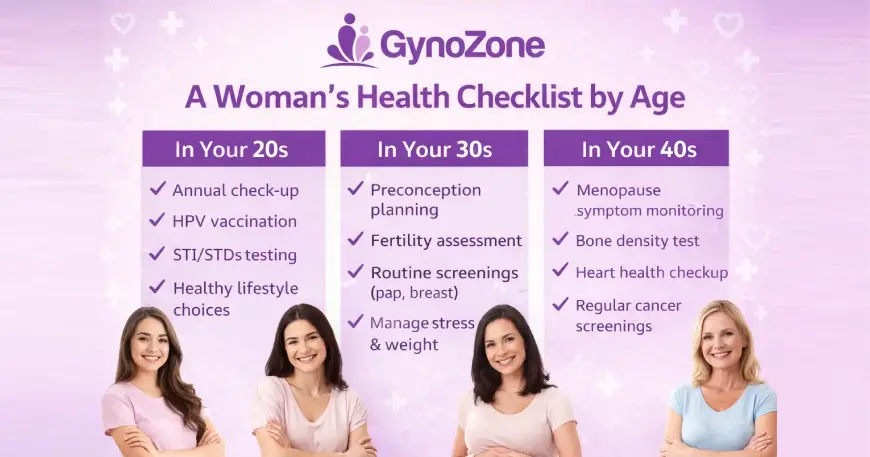

Health needs in case of women change as the body passes through all the stages of life-teen years to post-menopause. There are also preventive care, screenings and lifestyle changes which play an important role in long-term wellness.
These are ten year-by-year checklists that would allow women to remain proactive regarding their wellness.
In Your 20s: Building The Foundation
The 20s are a decade of establishing lifetime health. Most women are energetic and strong at this age, although prevention is important.
Health Focus:
- Reproductive health: Be sure to attend gynecology checkups regularly (after every 3 years or as it is recommended). Discuss family planning and contraceptives.
- Vaccination: You have to be up-to-date on HPV, flu, and tetanus.
- Mental health: Stress can be due to college, work and relationships. You are supposed to take care of yourself mentally and refer to a specialist when you need help.
- Life practices: Have a routine exercise, nourishing diet, and no smoking and consuming liquor.
Checklist:
- STD screenings provided if sexually active
- The monitoring of blood pressure and BMI
- Self-examination of skin abnormal cells
In Your 30s: Balancing between Health and Work
In many cases the 30s are also accompanied by challenges; work, beginning families or both.
Health Focus:
- Fertility awareness: Give yourself a fertility test with a gynecologist in case you are planning to have children.
- Pregnancy wellness: In the case of pregnant women, prenatal vitamins, frequent checkups and screenings are essential.
- Prevention screenings: Cholesterol, blood sugar and thyroid screenings are more significant.
Checklist:
- Skin and breast self-checkups
- Mental health check-ins
In Your 40s: Preparing for Midlife Changes
Pre-menopause frequently begins in the 40s. The changes in hormones, metabolism, and the heightened risk of chronic illnesses
Health Focus:
- Breast health: Start having an annual or biannual mammogram (according to the recommendation of your doctor and your family history).
- Cardiovascular: There is a risk of heart disease, it is important to check blood pressure, cholesterol, blood sugar regularly.
- Bone health: Intake of Calcium and Vitamin D becomes critical in ensuring that the bones are strong.
- Reproductive health: Menstrual abnormalities, hot flash, or mood change can start, keep a record of these changes.
Checklist:
- Thyroid function test
- Checks of blood sugar and cholesterol after every 3-5 years.
- Eye check-ups for vision changes
Your 50s: Navigating Menopause and Beyond
At the age of 50, many women enter menopause. This phase is marked by hormonal shifts impacting the heart, bones, and mind
Health Focus:
- Menopause treatment: Hot flushes, bone loss, mood swings, etc. talk to your physician. Hormone replacement therapy can be taken into account.
- Cancer screening: Colonoscopy should be done at the age of 50 (or younger in high-risk individuals).
- Heart and Bone: Post-menopause puts one at risk of heart disease and osteoporosis. Make sure that there is sufficient calcium, Vitamin D, and weight-bearing activities.
Checklist:
- Bone density scan (DEXA)
- Mammogram every 1–2 years
- Screenings of blood pressure, cholesterol, and diabetes.
- Annual skin check-ups
In your 60s and beyond: Aging gracefully
Health in your 60s and beyond is about chronic disease management and prevention falls and independence.
Health Focus:
- Bones and joints: Osteoporosis and arthritis are common; strengthen bones through physical activities.
- Cardiovascular: Simply continue to check blood pressure, cholesterol levels, and blood glucose
- Cancer screening: Continuous mammogram, colon, and skin screening based on the health history.
- Cognitive: Be active in the mind through reading, solving puzzles and socializing.
Checklist:
- Mammogram (continue, as recommended)
- Annual eye and hearing tests
Maintaining the health of a woman is a lifelong process which requires care and adjustment, as well as self-care in all ages. It will be possible to avoid potential problems in the early stages and live a long and healthy life because it is proactive with the help of checkups, screenings, and healthy habits. Different people have different needs and you should always consult with your healthcare provider.