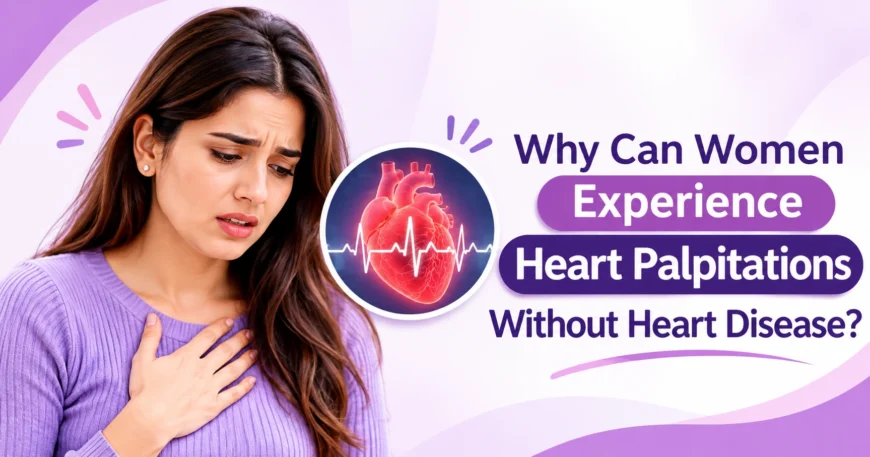

Have you ever felt your heart suddenly beating faster, harder, or differently than usual?
This feeling is called a heart palpitation. It can feel like your heart is racing, pounding, fluttering, or skipping a beat. Palpitations can be frightening, especially when they happen without warning.
However, feeling your heartbeat does not always mean there is a heart problem. Many everyday factors can cause palpitations, including stress, lack of sleep, caffeine, dehydration, hormonal changes, and some health conditions.
Understanding these possible causes can help women recognize when palpitations may need medical attention.
What Do Heart Palpitations Feel Like?
Palpitations can feel different from one woman to another. Some women may notice a rapid heartbeat, while others may feel a strong thumping in the chest.
You may also feel your heart fluttering or beating irregularly for a few moments. Some women notice these sensations while resting, while others experience them during activity.
Palpitations can last for a few seconds or several minutes. Their frequency can also vary.
Occasional palpitations are often harmless, but repeated or severe symptoms should not be ignored.
Can Stress Cause Heart Palpitations?
Yes, stress and anxiety can affect your heartbeat.
When you feel stressed, your body releases hormones that prepare you to respond to a situation. These changes can increase your heart rate and make your heartbeat feel stronger.
Even worrying about work, family, finances, or personal situations can sometimes bring on palpitations.
Some women may also notice them during periods of intense anxiety or emotional stress.
Relaxation, slow breathing, adequate sleep, and regular physical activity can help reduce stress-related symptoms.
Can Caffeine Make Your Heart Beat Faster?
Caffeine can stimulate the nervous system and increase alertness.
For some women, too much caffeine can also cause a faster or stronger heartbeat. Coffee, energy drinks, strong tea, and some other caffeinated products can contribute to this feeling.
Sensitivity to caffeine varies from person to person.
If you notice palpitations after drinking caffeinated beverages, reducing your intake may help you identify whether there is a connection.
Can Hormonal Changes Affect Heart Palpitations?
Hormonal changes can influence many body functions, including heart rate.
Some women notice palpitations around hormonal changes associated with their menstrual cycle, pregnancy, or menopause.
During menopause, changes in hormone levels can occur along with hot flashes, sweating, sleep problems, and palpitations.
These symptoms do not automatically mean that something is wrong with the heart. However, new or frequent palpitations should still be discussed with a healthcare professional.
Can Anemia Cause Palpitations?
Anemia can also make the heart beat faster or harder.
When the body does not have enough healthy red blood cells or hemoglobin, less oxygen is carried to the tissues. The heart may work harder to meet the body’s oxygen needs.
Women with anemia may also experience tiredness, weakness, dizziness, headaches, or shortness of breath.
Heavy menstrual bleeding, nutritional deficiencies, and certain health conditions can contribute to anemia.
If palpitations occur along with unusual tiredness or dizziness, medical evaluation can help identify the cause.
Can Thyroid Problems Affect the Heartbeat?
The thyroid gland helps regulate several body functions, including metabolism and heart rate.
An overactive thyroid can sometimes cause a fast or irregular heartbeat. Other symptoms may include unexplained weight loss, sweating, nervousness, shaking, or difficulty sleeping.
This is one reason frequent palpitations should not always be blamed on stress or hormones.
A healthcare professional may recommend tests to check thyroid function when symptoms suggest a possible thyroid problem.
Can Dehydration Cause Palpitations?
Not drinking enough fluids can affect the body’s normal balance.
Dehydration may sometimes cause a faster heartbeat, especially when combined with sweating, vomiting, diarrhea, fever, or intense physical activity.
Women who spend time outdoors, exercise regularly, or are unwell may need to pay extra attention to fluid intake.
Drinking enough water throughout the day can help support normal body functions.
Can Medicines Cause Palpitations?
Some medicines and health products can affect heart rate.
Certain cold medicines, asthma medicines, thyroid medicines, and other products may cause palpitations in some people.
This does not mean that you should stop a prescribed medicine on your own.
If you notice new symptoms after starting a medicine, speak with your doctor or pharmacist. They can check whether the medicine could be contributing to the symptoms.
When Should Women Get Palpitations Checked?
Occasional palpitations may not indicate a serious problem, but certain symptoms need medical attention.
Seek prompt medical care if palpitations occur with:
- Chest pain or pressure
- Fainting or near-fainting
- Severe shortness of breath
- Severe dizziness
- A very fast heartbeat that does not settle
- New or worsening symptoms
Women with repeated episodes should also discuss them with a healthcare professional, even when the symptoms are mild.
Keeping track of when the palpitations happen can be useful. Note what you were doing, how long they lasted, what you had eaten or drunk, and whether other symptoms occurred.
This information can help your healthcare professional understand the pattern.
What Can Women Do When Palpitations Happen?
If a brief episode occurs, try to stay calm and sit somewhere comfortable.
Take slow, steady breaths and avoid immediately reaching for another caffeinated drink.
Make sure you are drinking enough fluids and getting adequate sleep. Regular meals, physical activity, and stress management can also support overall heart health.
However, these steps should not replace medical evaluation when symptoms are frequent, severe, or associated with warning signs.
What Women Should Know
Heart palpitations can happen for many reasons, and they do not always mean heart disease.
Stress, caffeine, hormonal changes, anemia, thyroid problems, dehydration, and some medicines can all contribute to noticeable changes in heartbeat.
Still, new, repeated, or severe palpitations deserve attention.
Knowing your symptoms and recognizing warning signs can help you take better care of your heart health.