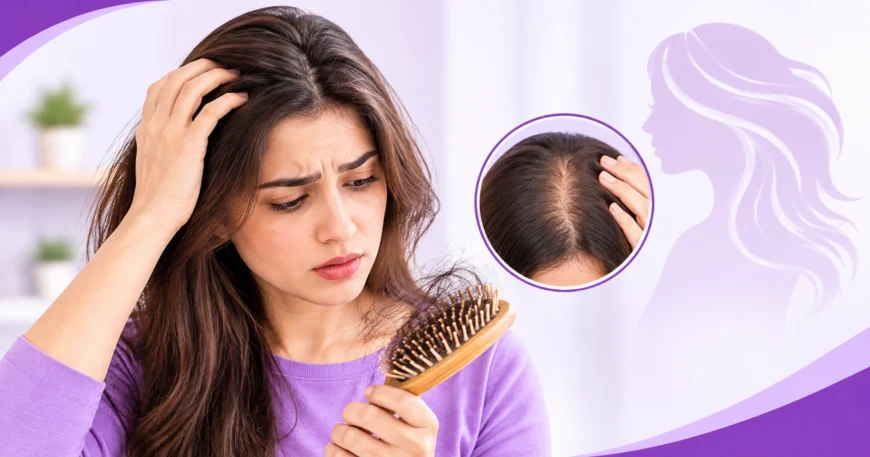

Hair loss is a common concern for many women. Finding more hair on a pillow, in a hairbrush, or during a shower can feel worrying. Although nutritional deficiencies can contribute to hair loss, they are not the only possible cause.
Hormonal changes, stress, certain medical conditions, medications, and hair care practices can also affect hair growth. Understanding these factors can help women identify possible reasons for hair loss and know when to seek professional advice.
1. How Do Hormonal Changes Affect Hair Growth?
Hormones play an important role in the hair growth cycle. Changes in hormone levels can affect how long hair grows and how much hair sheds.
Pregnancy, childbirth, menopause, and certain hormonal conditions can influence hair growth. Some women notice increased shedding a few months after childbirth. This is often temporary and occurs as hormone levels change.
During menopause, declining estrogen levels may contribute to changes in hair thickness. Some women also develop female pattern hair loss, which can cause gradual thinning around the parting or the top of the scalp.
Hormonal changes affect everyone differently. Persistent or noticeable hair loss deserves medical evaluation rather than being automatically attributed to hormones.
2. Can Thyroid Problems Cause Hair Loss?
Yes. Both an underactive thyroid and an overactive thyroid can affect hair growth.
The thyroid gland helps regulate several body functions, including metabolism. When thyroid hormone levels are too low or too high, the normal hair growth cycle can be disturbed.
Hair may become thinner, drier, or more fragile. Some women also notice changes in energy levels, body weight, skin, or their menstrual cycle.
Hair loss alone does not confirm a thyroid problem. However, when it occurs alongside other symptoms, a healthcare professional may recommend thyroid testing.
3. Can Stress Lead to Excessive Hair Shedding?
Physical or emotional stress can affect the hair growth cycle. Significant stress may push more hair follicles into the resting phase, leading to increased shedding several months later.
This condition is called telogen effluvium. It can follow events such as a major illness, surgery, childbirth, rapid weight loss, or prolonged emotional stress.
Women may notice more hair falling out while washing or brushing. The shedding can appear sudden, even though the trigger occurred months earlier.
In many cases, hair growth gradually improves once the underlying trigger is addressed. However, recovery takes time, and other causes of hair loss should also be considered.
4. How Can Certain Hairstyles Damage Hair?
Hair care habits can contribute to hair loss, especially when they repeatedly place tension on the roots.
Tight ponytails, braids, buns, and extensions can pull on hair follicles. Over time, this may lead to traction alopecia, a type of hair loss caused by repeated pulling.
Frequent heat styling, harsh chemical treatments, bleaching, and vigorous brushing can also weaken hair shafts. This may cause breakage, making the hair look thinner even when the follicles are still producing hair.
Choosing looser hairstyles, limiting excessive heat, and handling wet hair gently can help reduce damage. Early changes are important because prolonged tension can sometimes cause permanent hair loss.
5. Can Medical Conditions Cause Hair Loss?
Certain medical conditions can affect the scalp or disrupt normal hair growth.
Alopecia areata is an autoimmune condition that can cause sudden, round patches of hair loss. In this condition, the immune system mistakenly attacks hair follicles.
Scalp conditions such as fungal infections and inflammatory skin disorders can also cause hair loss. Symptoms may include itching, redness, scaling, tenderness, or broken hairs.
Female pattern hair loss is another common cause. It usually develops gradually and may appear as a wider parting or reduced hair density over the top of the scalp.
A healthcare professional can examine the scalp and recommend suitable tests or treatment based on the suspected cause.
6. Can Medicines Contribute to Hair Loss?
Some medicines can affect hair growth as a side effect. Depending on the medicine, hair shedding may begin after starting treatment or changing the dose.
Certain cancer treatments are well known for causing hair loss. Some other medicines can also affect the hair growth cycle, although this does not happen to everyone.
If hair loss begins after starting a new medicine, discuss the timing with your healthcare professional. Do not stop or change a prescribed medicine on your own.
A professional can review your medicines, assess other possible causes, and help determine the safest next steps.
7. When Should Women Seek Medical Advice for Hair Loss?
Losing some hair each day is normal. However, a noticeable change in hair density or shedding may need attention.
Consider seeking medical advice if you notice:
- Sudden or heavy hair shedding.
- Round or clearly defined bald patches.
- A gradually widening parting or persistent thinning.
- Scalp pain, itching, redness, or scaling.
- Hair loss accompanied by unusual fatigue, weight changes, or menstrual irregularities.
- Hair loss that continues or worsens over time.
A healthcare professional may review your health history, examine your scalp, and recommend blood tests when appropriate. Tests depend on your symptoms and may assess thyroid function or possible deficiencies.
Treatment varies according to the cause. Some types of hair loss improve once the underlying trigger is addressed, while others may need specific treatment. Early assessment can help identify the most suitable approach.
What Women Should Know?
Hair loss is not always caused by a lack of nutrients. Hormonal changes, thyroid disorders, stress, scalp conditions, medicines, and certain hair care practices can all play a role.
Avoid starting supplements or hair loss treatments without understanding the possible cause. Excessive intake of some nutrients can also be harmful.
Pay attention to changes in your hair and scalp, especially when they occur alongside other symptoms. A timely medical assessment can help identify the cause and guide appropriate care.